How to Choose a Plastic Pot Manufacturer in India: A Buyer's Checklist
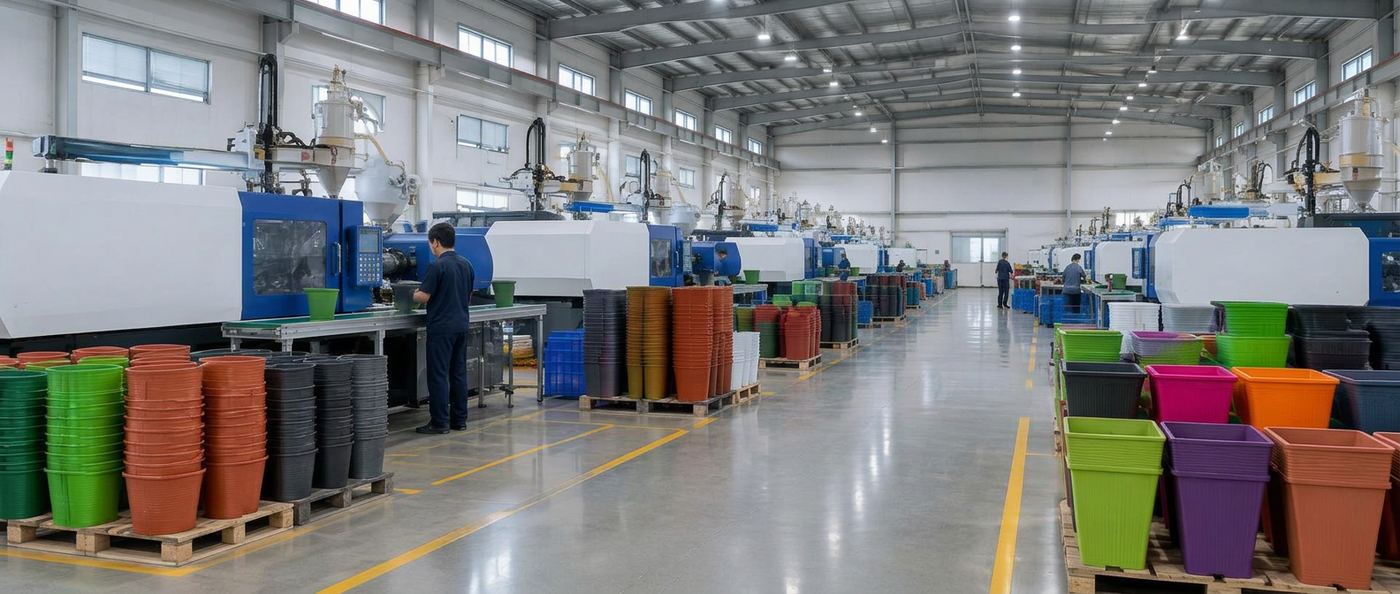
Choosing a plastic pot manufacturer in India is an important decision for nurseries, garden centres, dealers and businesses purchasing planters in bulk. Your supplier affects more than the purchase price: product quality, stock availability, delivery reliability and support all influence your business.
A pot that looks attractive in a catalogue may not meet your customers' expectations. A low quotation can also become expensive once freight, packaging and damaged pieces are considered.
Before placing your first wholesale order, use this checklist to compare manufacturers and choose a supplier that fits your requirements.
1. Define What You Need Before Comparing Suppliers
Start with your customers and the purpose of the purchase. A nursery buying pots for growing plants may have different requirements from a retailer selling decorative planters. A landscape contractor may need large outdoor pots, while a garden centre may want a range of sizes, colours and designs.
Prepare a short requirement list covering:
- Purpose: growing plants, resale, home décor or landscaping.
- Product types: standard plastic pots, decorative planters, hanging pots, self-watering planters or large outdoor planters.
- Sizes: required dimensions and capacity.
- Quantity: initial order and likely repeat purchases.
- Delivery location: city and PIN code.
- Timeline: when the products are needed.
Clear requirements help manufacturers recommend suitable products and provide comparable quotations.
2. Verify the Manufacturer's Business Details
Before making a payment, check who you are buying from. Ask for the company's legal name, GST details, business address and a formal quotation. Confirm whether the supplier manufactures the products, sources them from other businesses, or does both.
If dealing directly with a manufacturer matters to your business, request details about its manufacturing facilities. A factory visit or a scheduled video walkthrough can help you understand its operations.
The quotation, invoice and payment beneficiary should be consistent. Clarify any differences before proceeding.
3. Check Product Quality Through Samples
Photographs are useful for shortlisting products, but samples give you a better basis for evaluating quality. Inspect the following:
| Quality check | What to look for |
|---|---|
| Shape and finish | Consistent shape, clean edges and an even surface |
| Stability | A base that sits properly on a flat surface |
| Wall construction | Suitability for the intended use and handling |
| Drainage | Drainage provisions appropriate for the product |
| Colour | Consistency across samples of the same variant |
| Dimensions | Measurements matching the quoted specifications |
| Accessories | Correct fit of trays, hangers or other supplied parts |
For products advertised as UV-resistant, suitable for outdoor use or capable of supporting a specific load, ask how those claims are supported.
Approve the exact product, size and colour before confirming a bulk order. Retain the approved sample as a reference for future deliveries.
4. Evaluate the Product Range for Your Customers
A useful product range should match what your customers buy. For dealers and garden centres, assess the range across five elements: shape, size, pattern, texture and colour. Also consider whether the supplier offers options at the price points relevant to your market.
Ask yourself:
- Does the range cover everyday purchases and premium requirements?
- Are matching sizes and colours available?
- Can customers purchase suitable trays or accessories?
- Can the supplier replenish the same products later?
Start with a focused assortment rather than ordering every available design. Expand the range based on enquiries, sales and repeat demand.
5. Understand MOQ and Order Flexibility
Minimum order quantity, or MOQ, may apply to an entire order, an individual product, a colour or a carton. Ask the manufacturer to explain:
- Minimum order value.
- Minimum quantity per SKU.
- Pieces packed in each carton.
- Whether mixed sizes and colours are allowed.
- Reorder requirements.
- Separate terms for customised products.
This is particularly important for new dealers. An attractive unit price may offer little benefit if the required quantities leave you with slow-moving inventory.
6. Compare Landed Cost, Not Just Unit Price
The quoted pot price is only one part of the purchase cost. Compare product charges, packaging, freight, loading or handling charges, and the treatment of damaged or missing pieces. Review GST separately with your accounts team, including any eligible input tax credit.
Ask suppliers to quote the same sizes, quantities, accessories and delivery destination. Otherwise, two quotations may appear comparable while covering different specifications.
For resale purchases, also consider the expected selling price and all selling expenses before estimating your margin.
7. Confirm Availability and Delivery Commitments
A reliable supply arrangement helps you plan stock and fulfil customer commitments. Before ordering, confirm:
- Which items are ready in stock.
- Which items require production.
- Expected dispatch date.
- Estimated transit time.
- Whether partial dispatches are possible.
- How shortages or unavailable colours will be handled.
Keep dispatch timing and delivery timing separate. Products leaving the factory on a particular date does not mean they will reach your location that day. Request written confirmation of the agreed schedule.
8. Review Packaging and Damage Handling
Packaging should suit the product and the transport route. Ask how pots, trays and accessories will be packed, especially when ordering large planters or mixed products. Confirm the procedure for reporting damage, shortages or incorrect items. Get clarity on:
- The reporting deadline after receipt.
- Photographs or documents required.
- Responsibility for transit damage.
- Replacement, credit or other resolution terms.
Inspect the shipment promptly on arrival and retain the delivery documents.
9. Assess Dealer and Sales Support
For a dealer or distributor, supplier support can make product selection and customer communication easier. Ask whether the manufacturer provides:
- An updated catalogue and product specifications.
- Clear wholesale price lists.
- Product photographs for approved marketing use.
- Guidance on choosing an initial assortment.
- A contact person for orders and complaints.
- Written dealership terms, where applicable.
If territory rights or exclusivity are discussed, ask for the exact scope and conditions in writing.
10. Begin with a Trial Order
A trial order lets you evaluate the complete buying experience. Check whether the delivered products match the approved samples, quantities are correct, packaging is adequate and communication is timely. For resale stock, track customer feedback and sales before placing a larger order.
A successful trial order provides a stronger basis for a long-term relationship than a catalogue or a verbal promise alone.
Plastic Pot Manufacturer Selection Checklist
- Business identity and billing details checked.
- Product requirements clearly defined.
- Samples inspected and approved.
- Sizes, colours and accessories confirmed.
- MOQ and carton quantities understood.
- Landed cost compared.
- Stock and dispatch schedule confirmed.
- Damage and shortage terms documented.
- Sales support and contact person identified.
- Trial order reviewed.
Frequently Asked Questions
What should I ask a plastic pot manufacturer before ordering?
Ask about product specifications, samples, MOQ, carton quantities, pricing, freight, stock availability, dispatch timing and damage handling. Include your delivery location and intended use when requesting a quotation.
Can I mix different sizes and colours in a wholesale order?
This depends on the manufacturer's packing and MOQ policy. Confirm mixed-order options and minimum quantities for each variant before placing your order.
How do I compare wholesale plastic pot prices?
Compare equivalent products and quantities. Include accessories, packaging, freight and other applicable charges so that you can assess the landed cost.
What information should I provide for a bulk quotation?
Share the product type, sizes, colours, quantities, delivery PIN code and required delivery date. Mention whether the pots are for resale, nursery use or a commercial project.